Brazil Computer Vision Market Size: USD 838M by 2030
Brazil computer vision market: USD 838.3 million by 2030 at 18.5 percent CAGR, per Grand View Research. The drivers, and why the moat is the dataset not the model.
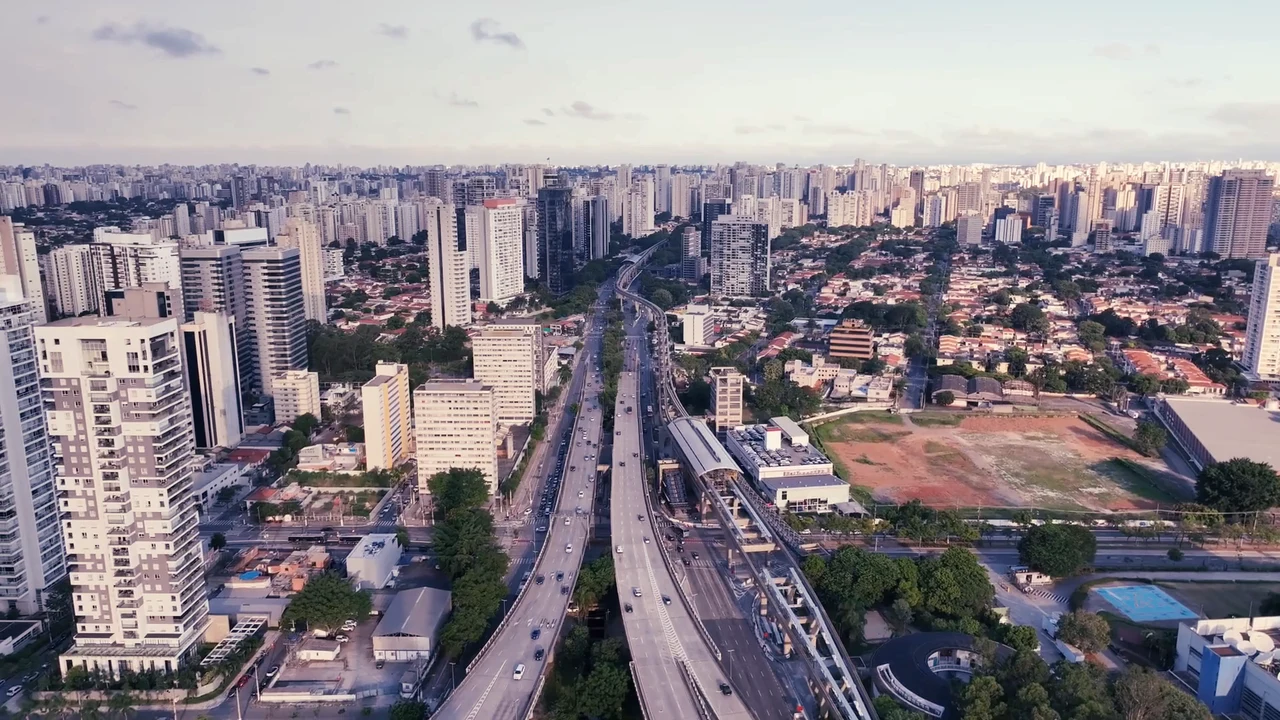 São Paulo / Brasil
The Brazil computer vision market is on a path past USD 800 million by 2030, and the most defensible venture inside it is not a vision model. It is a narrow vision copilot whose proprietary, labeled, domain-specific image corpus becomes a moat a generalist cannot copy.
That framing matters because computer vision is the one AI capability where Brazil's physical scale is the input. The country runs on plants, fields, warehouses, and store floors, and vision acts directly on all of them.
Avante Ventures is a venture builder building AI-native companies in Brazil and Latin America, and this is a map of where a venture builder would actually build in vision, not a market-research summary.
The Brazil computer vision market, with dated numbers
Size the Brazil computer vision market honestly and the forecasts split into two camps. State both rather than picking the flattering one.
The high-growth camp is the consensus. Grand View Research projects the Brazil computer vision market at USD 838.3 million by 2030, at roughly 18.5% CAGR. Market Research Future puts the 2024 base near USD 516 million and grows it at about 18% toward USD 3.3 billion by 2035. IMARC sits on a flatter curve, near USD 469 million in 2025 reaching about USD 780 million by 2034 at roughly 5.64%.
The gap between an 18% curve and a 5.6% curve is wide, so read the size as directionally large and fast-growing, not precise. For regional context, Grand View sizes the Latin America computer vision market at USD 2,256.4 million by 2030 at 20.4% CAGR, which makes Brazil the largest single national slice of the region.
USD 838.3 million projected size of the Brazil computer vision market by 2030, at roughly 18.5% CAGR.
— Grand View Research
Why vision lands hardest in Brazil's physical economy
Computer vision pays off most where a country already operates at scale in the physical world. Brazil is built that way.
Services account for roughly 70% of Brazilian GDP, with some 2024 readings closer to 72.7%, per IBGE national accounts. That is the surface area vision acts on, and very little of it is digitized. The opportunity is the gap between a large physical economy and the thin software running on top of it.
- Manufacturing and quality inspection. Defect and surface inspection at line speed, where vision plus deep learning checks every part rather than a sample.
- Agribusiness, crop and livestock monitoring. Brazil is one of the largest agricultural producers on earth, which makes image and satellite monitoring a national-scale problem.
- Logistics and warehouse automation. Package, pallet, and dock recognition for throughput and exception handling.
- Retail loss prevention and shelf analytics. Shrink control and on-shelf availability across a large, fragmented retail base.
The AI-native openings across verticals
The opening is not a general vision model. It is a narrow copilot that owns a workflow and the labeled data that workflow produces. Match each opening to where Brazil already has operator depth.
Agribusiness is the most evidenced opening. Brazil's Embrapa already runs national-scale agricultural monitoring that pairs satellite image time series with machine-learning classification, and in Mato Grosso it tracked integrated crop-livestock areas expanding from about 1.1 million to 2.6 million hectares between 2013 and 2019. A venture-grade build sits one layer closer to the operator than a government program, making per-field or per-animal calls for a specific producer segment.
Manufacturing quality inspection is the second opening. Vision plus deep learning can inspect 100% of parts at line speed instead of a sample, and the defensible version is trained on one producer's defect taxonomy, not a generic model. Logistics and retail vision are well understood globally, so the edge in Brazil is operator depth and a proprietary labeled corpus for local conditions, not the architecture. The Avante view on this is the Brazil services economy opportunity, where physical scale plus low software penetration is the structural opening.
Why the labeled dataset is the moat
A generic vision model is a commodity. The asset a competitor cannot clone is a large, clean, domain-specific corpus of labeled images tied to a workflow people already use.
The mechanism is a data network effect. Every inspection, every flagged frame, every operator correction adds a labeled example, the model improves, it wins more usage, and the usage produces more labeled examples. A generalist starting later faces the same labeling cost with none of the accumulated corpus. This is the same logic behind data network effects in vertical AI.
It is also the honest line on defensibility. If the only thing a venture ships is a model on off-the-shelf cameras, it has no moat. The moat is the annotated dataset and the production workflow, and that is the part a generalist cannot copy. Embrapa needed years of labeled satellite imagery to track crop-livestock systems across Mato Grosso, and that accumulated record, not the classifier, is what a newcomer would have to rebuild from zero.
Why a vision copilot fits the data-to-fund flywheel
A vision copilot is a clean fit for the recurring Avante pattern, the copilot to data to fund flywheel. Build an AI copilot to generate proprietary data, then use that data to raise and deploy capital.
In vision, the copilot is the data factory. A crop or livestock copilot accumulates a labeled record of conditions and outcomes, which can underwrite a financing or insurance product for that segment. A quality-inspection copilot accumulates a defect and yield record, which can underwrite an efficiency or warranty product.
The vision product is act one. The downstream vehicle is act two. This is the flywheel applied to the single AI capability where Brazil's physical scale is the raw input.
The labeling and edge-hardware problem
Computer vision is unforgiving in the physical world, and the failure modes are concrete. Treat them as the real constraints, not footnotes.
The timing argument cuts the other way. Per Epoch AI, the price to reach a fixed performance level has fallen a median of about 50x per year over three years, with the price to match GPT-4 on PhD-level science questions down about 40x per year. Cheap inference does not erase labeling and hardware cost. It does lower the bar to deploy, which is part of why an AI-native venture can launch without a Series A.
- Data and labeling cost. A useful corpus is expensive to build and annotate, and the cost lands before the moat exists.
- Edge-hardware dependence. Many use cases need cameras and on-site compute, which adds field complexity that pure software avoids.
- Accuracy thresholds. In inspection, agriculture, and safety, a wrong call has a physical cost, so the accuracy bar is high.
- The no-moat trap. A thin model on commodity cameras is trivially copyable. Defensibility has to come from proprietary data and a workflow.
How Avante would approach it
Avante Ventures treats computer vision as the place where Brazil's physical economy meets cheap inference. The venture builder launches 3-4 ventures per year through a six-stage system, Research, Partner, Build, Traction, Revenue, Compound, deploying $500K-1.5M per venture and retaining co-founder economics.
The studio edge in vision is operator depth. The scarce input is a domain operator with 10+ years of Brazilian-market scar tissue who knows the defect taxonomy, the agronomic calendar, or the warehouse reality, paired with a Silicon Valley playbook and first-ticket capital on day one. That structure is why studio IRR runs near ~50% versus ~19% for traditional VC, per the Global Startup Studio Network, and the full thesis is laid out in why Avante builds.
That is what separates a vision demo from a vision company. The demo runs a model on a camera. The company owns a labeled corpus and a workflow no generalist can copy.
Frequently asked questions
- How big is the Brazil computer vision market?
- The Brazil computer vision market is projected at USD 838.3 million by 2030 at roughly 18.5% CAGR, per Grand View Research. Market Research Future grows a 2024 base near USD 516 million toward USD 3.3 billion by 2035, while IMARC is on a flatter 5.64% curve, so read the size as directionally large rather than precise.
- What is the real moat in the Brazil computer vision market?
- The moat is a proprietary, labeled, domain-specific image dataset and the workflow it powers, not the vision model. A thin model on commodity cameras is copyable, so defensibility comes from a corpus a generalist cannot reproduce, built through a data network effect as usage generates more labeled examples.
- Which verticals does computer vision fit best in Brazil?
- Computer vision lands hardest where Brazil already operates at scale in the physical world. The strongest openings are manufacturing quality inspection, agribusiness crop and livestock monitoring, logistics and warehouse automation, and retail loss prevention, because services are roughly 70% of Brazilian GDP and digitization is still thin.
- How would a venture studio build in computer vision?
- Avante Ventures would build a narrow vision copilot that owns a workflow and the labeled data it produces, then use that corpus to underwrite a downstream financing, insurance, or efficiency vehicle. This is the copilot to data to fund flywheel, run by a domain operator with 10+ years of Brazilian-market scar tissue and $500K-1.5M of first-ticket capital.
Want more? Get one essay per week on venture building, AI-native businesses, and the Brazil opportunity.
Avante Intelligence · weekly · no spam. Or browse the Library