South America AI Image Generator Market: A Workflow Business in a Generative Costume
The South America AI image generator market is USD 42 million against USD 215.31 billion of regional ecommerce. The moat is the workflow, not the model.
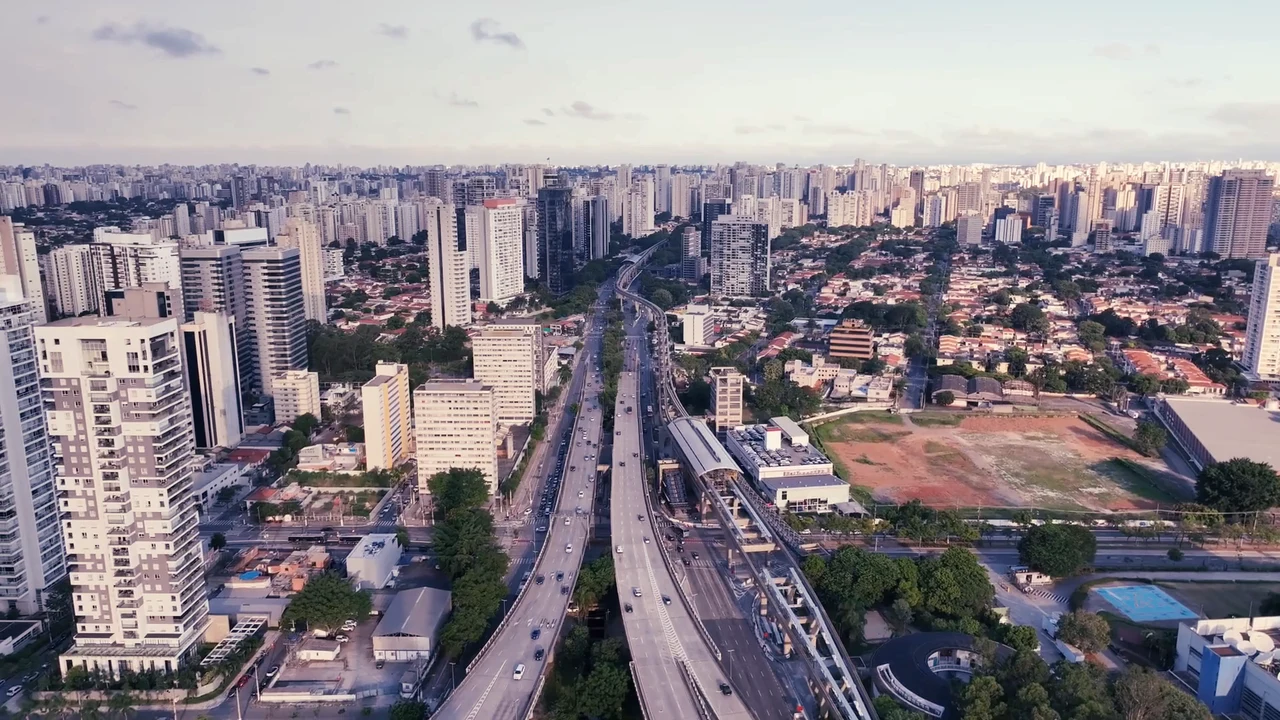
The South America AI image generator market was worth USD 42.0 million in 2024. Every generator sold across the continent, added together. The commerce those images exist to move is projected at USD 215.31 billion in 2026. Roughly 5,000 to 1. That ratio is the entire investment case, and it points hard away from building a generator.
Nobody on this continent will build a durable company by selling image generation. This is a workflow business wearing a generative AI costume, and Avante Ventures reads it as a commerce operations problem rather than a model problem. The evidence for that reading sits in vendor pricing pages, not in analyst forecasts.
What follows is the dated evidence, the two honest defects in the only regional sizing that exists, and the specific build that survives contact with a frontier lab shipping the same capability for free.
The South America AI image generator market, with dated numbers
Market Research Future sizes the South America AI image generator market at USD 42.0 million in 2024, rising to USD 49.56 million in 2025 and a projected USD 217 million to USD 259 million by 2035 at an 18.0 percent CAGR. Ecommerce is the largest slice of the 2024 base at USD 10.0 million, ahead of social media at USD 7.5 million and media and entertainment at USD 6.3 million.
Two defects in that report deserve saying out loud. Its body text projects USD 217 million for 2035 while its executive summary says USD 259.44 million, so the 2035 number is a range and not a point estimate. It also files Mexico at 10.5 percent inside a report titled South America, and the country shares do not sum to 100. Cite the direction. Do not cite the decimal.
Now set that against the commerce it serves. Latin American ecommerce is projected at USD 215.31 billion in 2026, growing roughly 1.5 times faster than the global average, per a joint Endeavor and Mercado Libre report dated 28 January 2026. Argentina, Brazil and Mexico account for close to 85 percent of regional sales, and 84 percent of purchases happen on a smartphone. Regional digital ad spend adds another USD 50.1 billion in 2026 on its way to USD 70.9 billion by 2029.
A category a vendor sizes at tens of millions of dollars across an entire continent is not a category. It is a line item inside somebody else's budget. The tool market is small because the tool is not where the value settles. That smallness is the signal, not the disappointment.
795 million items sold in a single quarter on one marketplace, against USD 22 billion of GMV and 89 million unique active buyers. That is the catalogue volume the images have to serve.
— Mercado Libre Q2 2026 results
Why the model layer has no moat and never will
Image generation is the most exposed category in the entire AI stack, and the pricing record proves it without needing an analyst. Google lists Gemini 3.1 Flash Lite Image at USD 0.0336 per 1K resolution image, dropping to USD 0.0168 with batch, with Gemini 3 Pro Image at USD 0.134 per 1K or 2K image and a 50 percent batch discount across the whole line.
The spread inside a single vendor's own lineup is the clearer tell. OpenAI prices gpt-image-1-mini at USD 8.00 per 1M output tokens against gpt-image-1 at USD 40.00, with batch again at half off. A vendor that undercuts itself fivefold inside one product line is not defending a moat. It is racing to the floor.
The floor is zero, because the weights are open and the license is permissive. Qwen-Image, a 20 billion parameter image generation and editing model, shipped on 4 August 2025 under Apache 2.0 and passed 300,438 downloads in its first month. Anyone with a GPU can run it commercially for the cost of electricity. Stanford HAI's AI Index puts the broader curve at a more than 280 fold drop in the cost of querying a GPT-3.5 equivalent model, from USD 20.00 per million tokens in November 2022 to USD 0.07 by October 2024.
State the conclusion without softening it. A South American company whose product is a generator competes on a capability that gets cheaper, better and more equal every quarter, against labs with vastly more capital and free open weights sitting underneath them. There is no version of that fight worth entering. The model is rented plumbing. Architect the venture so that swapping it is a configuration change and not a rebuild.
USD 20.00 per million tokens in November 2022 to USD 0.07 by October 2024. A more than 280 fold collapse in roughly 18 months, on the capability a generator startup would be selling.
— Stanford HAI, 2025 AI Index Report
Catalogue, advertising, real estate and the small-merchant segment
Four commercial openings exist here. Rank them by how much proprietary data each one accumulates, never by how large the slide looks. They are listed below in that order, and the last of them is the least obvious and the most defensible.
Two structural facts explain why a global tool never closes the gap. The first is who the merchant actually is. The ILO puts informality at 47.6 percent of employment in Latin America and the Caribbean in 2024, and ECLAC counts micro, small and medium companies as 99 percent of the regional industrial fabric. A merchant with 400 SKUs, no design team, no photo studio budget and a phone as their only device is not a Photoshop customer and never will be. They are reachable only through the marketplace, wallet or delivery app they already open every morning.
The second is that the region is not one buyer. The Cámara Colombiana de Comercio Electrónico counted 684.6 million online transactions in Colombia in 2025 worth COP 145.4 trillion, with volume up 19.9 percent against value up only 11.1 percent. Baskets got smaller and more frequent inside one country in one year. A Chilean shopper, a Colombian shopper and a Brazilian shopper do not answer to the same price anchor, the same seasonal cue or the same aspirational framing. That divergence is the localization argument, and it is exactly what a global tool treats as an afterthought.
- Marketplace and retail catalogue production at scale. Not one image. Ten thousand that are brand consistent, sized per marketplace template, legally cleared and localized per country. Elastic's Mercado Libre case study reports 4 million active sellers and 20 million live listings, up from 12 million two years earlier, with individual sellers running up to 50,000 items each.
- Advertising creative produced per segment rather than per campaign. Against USD 50.1 billion of regional digital ad spend in 2026, hundreds of variants per audience, per country and per channel only pencil out when generation is close to free, which it now is.
- Real estate and vehicle listing imagery. High volume, visually repetitive, commercially urgent and today mostly shot on phones in bad light. No verified regional market size exists for it, so the opportunity stays qualitative here rather than invented.
- The informal and small-merchant segment. EMARKETER projects USD 54.45 billion of incremental Latin American retail ecommerce between 2026 and 2028, with Mercado Libre and Amazon taking roughly two thirds and nearly USD 19 billion left for small and medium retailers.
Why brand consistency and integration are the actual product
The product is not the picture. The product is the guarantee that ten thousand pictures are all correct, all on brand, all cleared for use and already sitting in the systems where they get used.
Do the arithmetic on the generation half and it vanishes. Mercado Libre's roughly 20 million live listings, regenerated at Google's USD 0.0168 batch price, cost about USD 336,000 in raw generation. That is a calculation, 20 million multiplied by USD 0.0168, and not a published statistic. Against a USD 215.31 billion regional commerce base it is a rounding error. Generation is not the cost. Governance, rights, localization and integration are the cost.
What a buyer actually pays for is narrower and harder. A brand consistency layer trained on their proprietary catalogue and their approval history, so output matches their existing shelf instead of a generic aesthetic. Rights and legal clearance, so the marketing director keeps their job. Per country localization rules encoded once and applied automatically. And a live wire into the product information management system, the ERP, the marketplace listing API and the ad platform, so an approved asset lands where it is used without a human moving a file.
None of that is a model problem. All of it is scar tissue. It takes somebody who knows which marketplace rejects which aspect ratio, which legal review takes eleven days and which integration breaks at quarter end. That input is the whole company, and it is why the winning team here is built from domain operators with 10+ years of Brazilian-market scar tissue, paired with a Silicon Valley playbook and first-ticket capital, assembled on day one. The same structural edge runs through the Brazilian services economy opportunity, where services account for roughly 70% of Brazilian GDP with low software penetration. A generalist with a better model cannot buy it, and a frontier lab has no incentive to build it for a market this specific.
Of the seven powers, exactly two are available in this category and neither is technology. Switching costs, because a catalogue pipeline wired into a retailer's PIM and ad stack is not swapped casually. And cornered resource, in the form of the client's own approval history and brand rules, which no competitor can legally or practically obtain. Anyone claiming a technology power in image generation is describing a rented API.
Derived arithmetic, not a reported figure. 20 million live Mercado Libre listings multiplied by USD 0.0168 at batch pricing is roughly USD 336,000 to regenerate an entire marketplace catalogue. That is a rounding error against USD 215.31 billion of regional ecommerce.
— Avante calculation from Elastic listing counts and Google Gemini API pricing
How a catalogue copilot compounds into proprietary data
This category is a textbook expression of the copilot to data to fund flywheel, and the entry point is unusually measurable. The copilot earns its way into a retailer's catalogue process by beating the current agency loop on turnaround and rework. That is a number a procurement lead can check in one quarter, not a positioning claim.
Then the second-order effect starts. Every generation, every brand rejection, every legal note and every localization override becomes labelled proprietary data that no model provider holds and no competitor can buy. That corpus trains the brand consistency layer, which gets measurably better per client and creates the switching cost the model layer never can.
Once the pipeline is processing catalogue volume across several retailers, the venture is sitting on structured demand and performance data about what actually sells by country. In a region where 795 million items moved through one marketplace in a single quarter, where 20 million listings sit live at any moment and 84 percent of purchases happen on a phone, that dataset is the asset. It carries the next raise and, in the mature case, becomes a capital deployment product in its own right. The model at the bottom of the stack stays rented and interchangeable. The data loop is the company.
Frontier labs, pricing pressure, and the generation trap
Say this plainly rather than burying it in a risks appendix. This is the single most exposed category in the AI stack, and a venture here fails by default unless it owns workflow and integration.
The cost curve that opens the opportunity is the same curve that closes it. Cheap generation is what lets a regional venture serve enterprise catalogue volume without a Series A behind it. It is also what lets a frontier lab bundle a catalogue feature into a product tier at zero marginal cost. The only thing standing between those two outcomes is how much integration depth gets built first, and that window is measured in quarters.
So the kill criterion belongs in the plan before the first line of code. If at twelve months the venture's defensibility still rests on output quality rather than on integrations and accumulated approval data, it has failed and should be shut down rather than funded further.
The funding environment sharpens the same point. Latin American venture capital sits well below its 2021 peak and has concentrated into larger cheques across fewer deals. LAVCA's Trends in Tech series is the standing regional reference, and this analysis declines to quote a total it could not open and verify. Directionally, a concentrated market punishes the thin wrapper with a demo and no distribution, and rewards a venture with a named enterprise workflow, a signed design partner, revenue inside twelve months and a data asset that compounds.
- Frontier labs will ship the capability for free. Google, OpenAI and the design suites already price image generation as a loss leader for a larger platform. Any feature a thin layer adds is a candidate for absorption in the next release.
- Pricing pressure is structural, not cyclical. A fivefold gap inside one vendor's own lineup, a 50 percent batch discount and Apache 2.0 open weights at zero marginal cost mean gross margin on generation trends to nothing. A venture that prices per image is pricing a commodity.
- The generation trap. Generation demos beautifully and defends nothing. Governance, rights, localization and integration demo badly and defend everything. A team that cannot resist the demo will build the wrong company.
- Enterprise trust is a gate, not a feature. A large retailer will not put generated imagery on a live catalogue without provenance, rights clearance and an audit trail. That is a compliance build and a sales cycle.
How Avante would approach it
Avante Ventures is a venture builder building AI-native companies in Brazil and Latin America. It would treat this as a commerce operations problem rather than a generative AI problem, and it would say exactly that to the first customer in the first meeting.
The six-stage system applies cleanly here. Research narrows to one workflow with a named buyer, most likely mid market retail catalogue operations in Brazil with a second country in year two. Partner brings in a domain operator who has personally run catalogue production at regional scale, because that scar tissue is the scarce input and cannot be hired later. Build ships the brand consistency layer and the PIM and marketplace integrations first and treats the image model as swappable configuration. Traction proves the loop on one retailer's live catalogue with measured rework reduction, not with a demo reel. Revenue prices the workflow and the guarantee, never the image. Compound turns the accumulated approval corpus into the asset that carries the venture to its next raise.
The venture builder parameters are fixed rather than negotiated per deal. Avante launches 3-4 ventures per year, deploys $500K-$1.5M per venture across pre-seed and retains co-founder economics, with operating partners engaged through the first revenue milestone. Solving company plumbing once routes roughly $300K-$500K of effective capital per venture into product and traction rather than overhead. In a category where the window to build integration depth is measured in quarters, that reallocation is not a nice-to-have. The full model sits at why Avante builds rather than invests.
Venture studios post ~50% IRR versus an industry-standard ~19% for traditional VC, per the Global Startup Studio Network (GSSN), roughly 2.5x over realistic time horizons. That benchmark belongs to the studio model and never to a single firm's realized return. The mechanism behind it is unglamorous. Assembling operator, playbook and first capital on day one beats discovering them sequentially, and the gap is widest where the winning input is local knowledge rather than a global technical breakthrough.
AI infrastructure is now cheap enough to deploy without a Series A, and this category is the cleanest illustration of that fact in the entire stack. A USD 215.31 billion regional commerce base. 4 million marketplace sellers. Roughly half the workforce informal. And a generation layer that already costs close to nothing. Build the costume and a frontier lab takes the market next quarter. Build the workflow underneath it and the costume stops mattering.
Frequently asked questions
- How big is the South America AI image generator market?
- Market Research Future sizes the South America AI image generator market at USD 42.0 million in 2024, rising to USD 49.56 million in 2025 and a projected USD 217 million to USD 259 million by 2035 at an 18.0 percent CAGR. Read that report with two caveats. Its body text and its executive summary disagree on the 2035 figure, and it files Mexico under South America. Set it against USD 215.31 billion of projected Latin American ecommerce in 2026 and the ratio, roughly 5,000 to 1, is the finding rather than the forecast.
- Is there a moat in the South America AI image generator market?
- Not at the model layer, and there never will be. Google lists image generation at USD 0.0168 with batch pricing, OpenAI undercuts itself fivefold inside one product line with gpt-image-1-mini at USD 8.00 per 1M output tokens against gpt-image-1 at USD 40.00, and Qwen-Image ships 20 billion parameters under Apache 2.0. The defensible layer is the brand consistency system trained on a client's proprietary catalogue plus the integrations into the PIM, marketplace and ad platforms where commerce actually happens.
- What does it cost to regenerate a marketplace catalogue with AI?
- Roughly USD 336,000 for about 20 million live listings, using Google's USD 0.0168 batch rate. That number is arithmetic, 20 million multiplied by USD 0.0168, and not a published statistic. Against a USD 215.31 billion regional commerce base it is a rounding error, which is the cleanest proof that generation is not the business.
- Who buys AI product photography in South America?
- Three buyers, in order of how much proprietary data each one generates. Retailers and marketplace sellers running thousands of SKUs, where Elastic reports 4 million active Mercado Libre sellers and 20 million live listings. Advertisers producing creative per segment against USD 50.1 billion of regional digital ad spend in 2026. And the small-merchant segment, where the ILO puts informality at 47.6 percent of Latin American and Caribbean employment in 2024 and a photo shoot is out of reach at any price.
- Should a startup build an AI image generator in South America?
- No. Build the workflow around one instead. Avante Ventures is a venture builder building AI-native companies in Brazil and Latin America, and the kill criterion in this category is explicit. If at twelve months defensibility still rests on output quality rather than on integrations and accumulated approval data, the venture has failed and should be shut down rather than funded further.
Want more? Get one essay per week on venture building, AI-native businesses, and the Brazil opportunity.
Avante Intelligence · weekly · no spam. Or browse the Library